Niche Perfume Note Guide: How Scent Evolves Over Time
"The scent does not remain static; it travels through time, shifting from the bright spark of the first spray to the deep, lingering soul of the skin."
Understanding the Niche Perfume Note Guide requires recognizing that a fragrance is a living timeline of scent. By mastering the transition between top, middle, and base notes, you can navigate the complex layers of high-end perfumery.
This guide explores the structural evolution of scent, the historical context of fragrance, and the technical nuances of note transitions.
How does a Niche Perfume Note Guide define the scent journey?
As the sun rises over the vanity, a hand reaches for the glass bottle to trace the path of a complex niche scent journey.

A hand brushes against a glass bottle, releasing a sudden burst of citrus that fills the room before slowly softening into something heavier. This initial burst represents the top notes, which provide the immediate impression of a fragrance.
These volatile molecules are designed to evaporate quickly, setting the stage for the heart of the perfume.
The structure of a fragrance is built on evaporation rates to create a sense of movement. Top notes provide the initial impact, while middle notes provide the character, and base notes provide the longevity.
Deep fragrance breakdown reveals that these layers are not just different smells, but different chemical weights working in harmony.
The transition between these layers is where the true artistry of a perfumer resides. As the sharp edges of the top notes fade, the more stable middle notes emerge to take centerholder.
This shift ensures that the scent evolves rather than simply disappearing, creating a narrative that unfolds over several hours.
- Identify the initial top notes to understand the immediate impact.
- Trace the transition into the heart notes as the scent evolves.
- Recognize the final base notes that anchor the fragrance.
- In this sequence, the second step is the longest.
Why are the middle notes the heart of my perfume? A person walks through a garden, and as the initial freshness fades, a blooming floral aroma begins to dominate the air. This transition marks the arrival of the middle notes, often called the heart of the perfume. These notes are more stable than top notes but more delicate than the heavy base.

The heart notes serve as the bridge between the fleeting opening and the enduring dry down. They provide the core identity that most people associate with a specific perfume. While top notes grab attention, the middle notes sustain interest and provide the emotional depth of the scent profile.
Understanding scent layering explained helps enthusiasts appreciate how these middle notes interact with the skin. Because they are less volatile than citrus or light herbs, they can linger for several hours.
This phase is where the complex character of a niche fragrance truly begins to reveal itself to the wearer.
The middle notes act as the bridge, smoothing the transition from bright top notes to heavy base notes.
How do base notes create a lasting impression?
As evening falls in the dimly lit lounge, a warm, woody sensation clings to my skin from the deep base of the niche perfume.
As evening falls, the bright floral scents of the afternoon settle into a warm, woody embrace that clings to a coat. This signifies the arrival of the base notes, the heaviest and most persistent molecules in a fragrance.
These notes provide the foundation upon which the entire scent structure is built.
Base notes are composed of large molecules that evaporate very slowly, often lasting many hours or even days on fabric. They often include ingredients like resins, woods, or musk to provide depth and fixative qualities.
This stage is the final chapter of the fragrance journey, leaving a lingering trail known as a sillage.
The relationship between the heart and the base is crucial for the longevity of the perfume. A well-constructed fragrance uses base notes to anchor the lighter middle notes, preventing them from evaporating too quickly.
This balance ensures that the scent remains present on the skin throughout the day.

Base notes provide the foundational depth that remains on the skin long after the lighter elements have evaporated.
How does fragrance composition actually work? A perfumer sits at a laboratory bench, carefully weighing resins and oils to ensure the perfect balance of evaporation. This meticulous process is what separates amateur blends from professional niche compositions.
Every ingredient is chosen for its ability to interact with other notes over a specific timeline.
Advanced perfume layering techniques often involve understanding how different ingredients behave over time. For example, some ingredients act as fixatives, slowing down the evaporation of lighter notes.
This technical aspect allows perfumers to extend the life of delicate scents like rose or jasmine.
The complexity of these compositions is reflected in how they change. A single bottle of perfume can feel like three different scents depending on the hour of the day. This temporal dimension is the hallmark of high-quality perfumery, turning a simple product into a multi-sensory experience.
Composition requires a precise balance of volatility to ensure the scent unfolds over time.
Can historical scents inform modern fragrance structure?
A researcher examines an ancient vessel, imagining the heavy, resinous scents that once filled a temple. This connection to the past shows that while chemistry has evolved, the fundamental desire for layered scent remains constant. History provides the blueprint for how we perceive aroma.
In May 2018, an ancient perfume "Rodo" (Rose) was recreated for the Greek National Archaeological Museum's anniversary show "Countless Aspects of Beauty", allowing visitors to approach antiquity through their olfaction receptors.
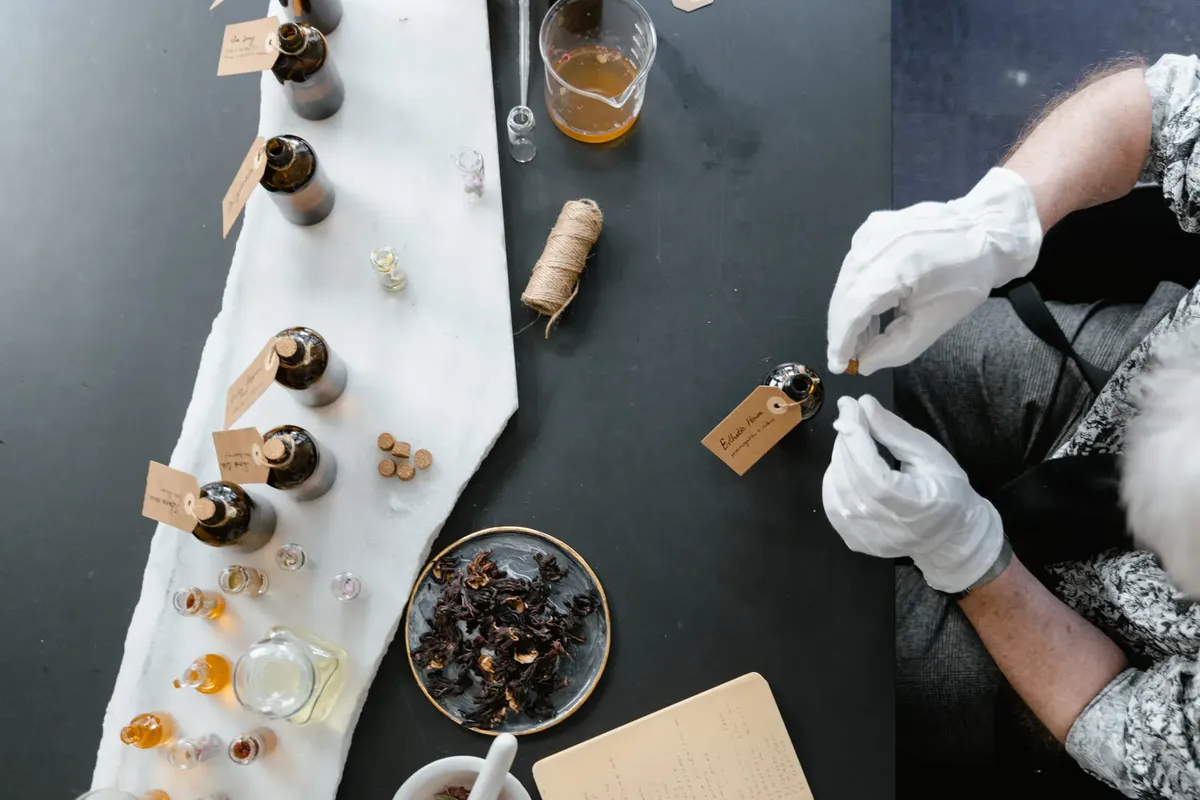
This recreation highlights how scent can bridge the gap between modern science and ancient tradition.
| Note Type | Primary Function | Evaporation Speed |
|---|---|---|
| Top Notes | Immediate Impression | Rapid |
| Base Notes | Longevity and Depth | Slow |
I remember testing a heavy amber-based scent where the transition from the spicy top to the resinous base felt like a complete change in atmosphere. This comparison shows how the weight of the molecules dictates the user experience.
One limitation of understanding these notes is that individual skin chemistry can alter how these layers manifest, as certain ingredients may react differently depending on the wearer's natural oils.
Traditional accords often serve as the structural blueprint for contemporary scent profiles.
Wikipedia: Perfume
The subject here is Niche Perfume Note Guide.
How Niche Scents Evolve
Related



Comments 0