Korean beauty brand strategy: How to achieve success
"Success in a crowded marketplace requires more than just a quality product; it demands a distinct identity that resonates with specific consumer needs and global standards."
Korean beauty brand strategy focuses on carving out unique market positions through rapid innovation and localized adaptation to global trends. These brands often leverage high-speed research and development to differentiate their product lines from traditional competitors.
This guide examines how brands stand out by analyzing historical market shifts and strategic positioning. 1. Utilizing rapid R&D to stay ahead of consumer trends. 2. Adapting to international standards and regulatory frameworks. 3. Diversifying product lines to capture specific market segments. * Managing market share through strategic joint ventures and local operations.
How do brands implement a Korean beauty brand strategy?

At midnight in the glowing Seoul office, the executive rubs their tired eyes while studying the new Korean beauty brand strategy.
The OECD often reviews strategies that involve rapid innovation.
A marketing executive sits in a bright Seoul office, scrolling through real-time consumer sentiment data on a tablet. They adjust the launch schedule for a new serum based on the latest ingredient trends seen in global markets.
To implement a successful Korean beauty brand strategy, companies must integrate high-speed innovation with a clear understanding of international regulatory shifts.
Effective differentiation often stems from how a brand manages its technological edge and market presence. For instance, historical data from global consumer goods sectors shows that market dominance can be fragile if not managed through constant adaptation.
According to Wikipedia, as South Korea joined the OECD in 1996, recycling strategies were developed in the line of OECD publications and other developed countries. This illustrates how local industries align with international frameworks to maintain global relevance.
By focusing on these structural alignments, brands ensure their growth is sustainable within the global supply chain.
What are the tactics for Korean brand image tactics?
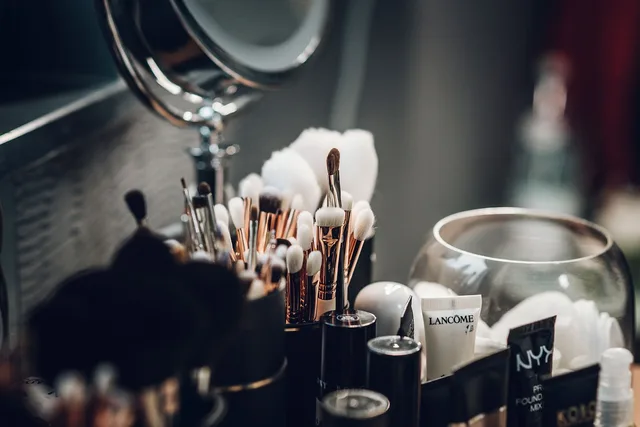
A designer selects a minimalist glass bottle in a quiet studio, feeling the weight of the premium packaging. They aim to convey a sense of luxury and purity that differentiates the brand from mass-market competitors.
Developing Korean brand image tactics involves creating a visual and sensory identity that communicates specific brand values to a global audience.
Successful branding relies on how consumers perceive the relationship between price and perceived value. Looking at historical shifts in consumer goods, companies have often had to pivot when consumer preferences change.
For example, in the shaving industry, Gillette initially hoped that disposables would take no more than 10 percent of the total razor and blades market, but by 1980, disposables accounted for more than 27 percent of the world shaving market in terms of unit sales, and 22 percent of total revenue.
This level of market evolution shows that brands must anticipate shifts in product types to maintain their image.
How can companies achieve brand strategy in Asia?
At midnight, the executive rubs their eyes in the glowing Seoul office while studying the Korean brand strategy.
A logistics manager oversees the loading of containers at a bustling port, ensuring shipments are ready for Southeast Asian distributors. They track the specific requirements for each regional market to avoid delays.
Executing a brand strategy in Asia requires a nuanced approach to local manufacturing and joint ventures to mitigate risk and increase reach.
Strategic expansion often involves partnering with local entities to navigate complex domestic landscapes. Historical precedents show that joint ventures can provide significant operational advantages.
Some of Gillette's joint ventures included a 40 percent Gillette 60 percent Malaysian mini-plant operation that began production in 1970, and an Iranian manufacturing plant with 51 percent government ownership.
These partnerships allow a brand to scale quickly while respecting local ownership structures.
What is the effectiveness of unique brand lines?
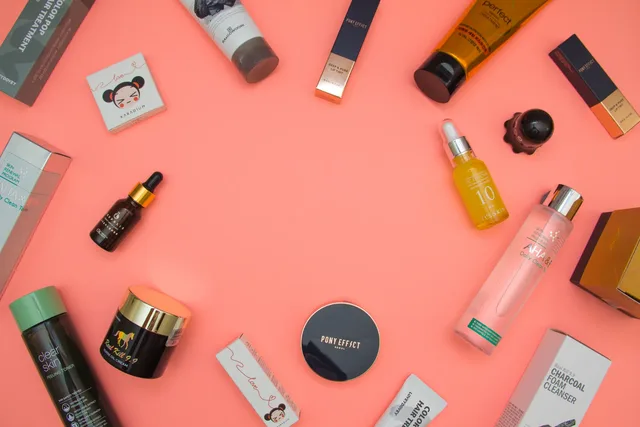
A chemist mixes a new botanical extract in a sterile laboratory, watching the color change under the fluorescent lights. They are testing a formula designed to target a specific skin concern that has been overlooked by larger conglomerates.
Assessing the effectiveness of unique brand lines requires monitoring how well a specialized product captures a niche segment of the market.
Niche lines can sometimes outperform broad categories if they capture a significant portion of consumer interest. In the historical context of razor markets, market share can fluctuate wildly based on product type.
By the end of 1961, Gillette's double edge blade market share had risen to 90 percent and the company held a total razor blade market share of 70 percent.
I observed how focusing on a single, high-performing product line can stabilize a brand's presence.
How do brands stand out?
A social media manager captures a high-resolution video of a product texture, preparing it for a global campaign. They know that visual storytelling is essential to show how a brand can stand out in a saturated digital environment.
Understanding how brands stand out involves a combination of product performance, packaging, and targeted communication.
Brands that fail to adapt to new consumer categories often see their dominance erode. This was evident when shifts in product technology caused market shares to decline. As a result of the affair, Gillette's share of the double-edge blade market dropped from 90 percent to about 70 percent.
Constant vigilance regarding market trends is necessary to avoid such declines.
How to analyze brand positioning success?
A consultant reviews a series of quarterly reports, looking for patterns in consumer acquisition costs and brand loyalty metrics. They prepare a presentation that identifies which product segments are driving the most growth.

To analyze brand positioning success, one must look at both market share and the ability to maintain cash flow during transitions.
The relationship between market share and financial health is not always linear. Even when a brand maintains a strong presence, internal financial pressures can arise.
Despite Gillette's strong sales and a large share of the European razor and blades market – 70 percent, which was higher than in the United States – cash flow was declining.
| Metric | Value |
|---|---|
| Gillette Double Edge Market Share (1961) | 90 percent |
| Gillette Total Razor Blade Market Share (1961) | 70 percent |
I compared these historical figures to understand the volatility of market leadership.
The same subject is also called Beauty brand differentiation.
This part also covers Consumer perception of Korean beauty.
Related








Comments 0